
Vertical spindle moulders with fixed or tilting shaft with manual, powered or CNC programmable setting.

Buyers Guides
The spindle moulder is the most productive profiling machine in professional woodworking, and by HSE statistics historically the most hazardous. An HSE survey of 1,000 woodworking accidents found that 14% occurred on vertical spindle moulding machines, with accidents arising from three primary causes: cutters snatching, workpiece kick-back, and, most commonly, operators failing to use the correct guarding.[1][2]
That combination of extraordinary capability and genuine risk is what defines the machine. Managed correctly, with trained operators, compliant tooling and appropriate guarding, a spindle moulder is the backbone of window manufacturing, door production, staircase work, furniture making and architectural joinery across the UK. Managed incorrectly, it is the subject of an HSE prosecution.
This guide introduces the spindle moulder to anyone who is new to the machine, whether you are a business owner evaluating your first purchase, an apprentice starting training, or a manager who has inherited a machine and needs to understand what it is and what compliance obligations come with it.

The spindle moulder is a surprisingly recent invention for a trade as ancient as woodworking. While saws, planes and chisels had been in use for centuries, forming consistent curved and moulded profiles in timber (chair backs, table edges and shaped door panels) remained entirely hand work until the mid-19th century.
The machine was patented in 1853 by Andrew Gear of Jamesville, Ohio, USA. Gear's design had a vertical spindle projecting through the centre of a horizontal table, which is the same fundamental geometry as a modern machine. In the USA, the machine became known as the shaper, a name still in use today. In the UK and across Europe, it became the spindle moulder, reflecting its primary application in producing moulded timber sections.[3]

The earliest machines were used almost entirely for shaping, producing curved profiles on individual components. Straight moulding, now the machine's most common application in UK joinery, came later. Long straight runs of skirting, architrave and moulded sections were produced on four-sided moulders (roller-fed machines that processed all four faces simultaneously), leaving the spindle moulder to handle the work that required precision profiling or curved forms.
As the 20th century progressed, the machine evolved significantly. Manufacturers developed increasingly rigid cast-iron designs, multiple spindle speeds, tilting spindles and eventually electronic inverter drives. The introduction of chip-limiting 'MAN-rated' tooling requirements in 2003, a legal change that fundamentally altered the type of cutterheads permitted on UK machines, and this reduced the severity of injuries substantially, though the machine remains a common cause of accidents in woodworking.[1]
When CNC machining centres became practical in the 1980s and 1990s, many assumed the spindle moulder would be made redundant. A CNC machine could, after all, profile, drill, rout and shape under numerical control. The prediction proved wrong.
Three factors kept the spindle moulder essential. First, economics: a CNC machining centre capable of replacing a spindle moulder in production joinery costs significantly more to purchase. For the majority of UK joinery businesses, where batch sizes are small, profiles change frequently and capital is constrained, the spindle moulder remains by far the more practical choice. Second, throughput: a power-fed spindle moulder running at 18 metres per minute over a full shift produces a volume of moulded hardwood section that a CNC router cannot match. Third, curved work: ring-fence and template shaping on a spindle moulder is faster, cheaper and often produces a better surface finish than CNC routing of the same profile.[3]
Today, most professional UK joinery shops run both CNC and spindle moulder. They are complementary tools, not competitors.
The principle is straightforward: a rotating vertical spindle arbor projects through the centre of a cast-iron table. MAN-rated cutterheads are mounted on the arbor. The operator, or a motorised power feed unit, moves the workpiece against the rotating cutter, guided by a fence, ring fence, template or jig, to produce a moulded or shaped profile along the workpiece edge or face.[2][3]
The range of operations a spindle moulder can perform is very wide:
Rebating: removing a rectangular section along the edge of a workpiece (door frames, window sections)
Grooving: cutting a slot along the length of a workpiece (panel grooves, glazing grooves, tongue preparation)
Moulding: forming decorative or functional profiles (ovolo, ogee, chamfer, hockey stick, bead and butt)
Scribing and sticking: producing the profiled edge (stick) and the matching negative profile (scribe) for frame-and-panel joinery
Panel raising: profiling the edge of a panel to fit a groove in a surrounding frame
Stopped work: operations where the cut starts and/or finishes before the end of the workpiece (stopped chamfers, housings)
Curved or shaped work: profiling irregular or curved workpieces guided by a ring fence and template
Spindle moulders are available in four main configurations. Understanding which type is appropriate for your work is one of the first decisions to make before buying.
The spindle arbor is vertical and remains vertical. Speed is set by stepped pulleys giving typically four discrete speeds.
Best suited for
Dedicated production lines for windows, doors, mouldings. Any shop where profiles are defined and repeated.
The spindle can be inclined from vertical, typically to 45°. Enables angled profiles without tilting the workpiece. Cannot be retrofitted to a fixed-spindle machine.
Best suited for
Stair manufacturers, bespoke joinery, window producers needing angled sill or weather bar profiles, bevel mouldings.
Replaces the belt-and-pulley speed change with an electronic variable-frequency drive. Continuous speed adjustment, soft start and integrated braking.
Best suited for
Any shop with a wide range of cutter diameters, or where precise speed matching to tooling is important.
NC-controlled axes for spindle height, tilt and fence position, with touchscreen and programme memory. Not a CNC machine in the router sense; it automates setup, not the cut itself.
Best suited for
High-volume shops changing profiles many times daily. Window and door manufacturers. Any production line where setup time is a significant cost.

Daltons' own operator training document for the spindle moulder (Unit 106) identifies the following as the principal parts every operator must understand.[2]
The main frame, either cast iron or heavy steel fabrication, houses the motor, drive mechanism and spindle-height adjustment. It carries a precision-ground cast-iron table to which fences, guards and accessories are bolted. The table has a central opening through which the spindle projects; this is closed to the minimum necessary gap by table rings matched to the cutter diameter in use.
The rotating shaft onto which cutterheads are mounted. Standard diameters are 30 mm (smaller machines), 40 mm (increasingly popular with UK professionals), and 50 mm (heavy industrial). The spindle rises and falls vertically, adjusted by a handwheel with position indicated by a digital readout (DRO) on most modern machines. Adjusting spindle height upwards rather than downwards eliminates backlash in the rise-and-fall mechanism and improves repeatability.[2]
A two-piece fence assembly of in-feed and out-feed plates, adjustable laterally and forward/back. For straight work, a false fence (a hardwood or MDF board spanning the full fence width) is broken through by the rotating cutter, providing continuous gap-free workpiece support. A false fence must be used for all hand-fed straight work, and also when a power feed unit is in use.[1][2]
The guarding system is more complex than on most woodworking machines because it must simultaneously guard the cutter, apply downward pressure to prevent workpiece lift, and apply lateral pressure to keep the workpiece against the fence, all while allowing continuous workpiece movement. The principal elements are:
Hood guard / front visor: prevents access to the spindle from above; incorporates the extraction inlet
Shaw guard (top pressure): a spring-loaded pad, typically 100–200 mm long, pressing downward onto the workpiece, guarding the cutter and providing hold-down pressure. Two Shaw guards, one on each side of the cutter, form a 'tunnel' through which the workpiece passes safely
Side Shaw guard / fence pressure: a lateral spring-loaded pad that keeps the workpiece against the fence and guards the outfeed side of the cutter
The Shaw guard must be long enough to prevent the operator's hands reaching the cutters.[2]
Concentric insert rings that reduce the opening in the table around the spindle to match the cutter diameter in use. Essential for safe operation: they prevent workpiece edges from dropping into an oversized gap, which causes vibration and poor surface finish. A full set of table rings, covering the range of cutter diameters used on that machine, should be available at every machine.
All spindle moulders must bring the cutter block to rest within 10 seconds of the stop button being pressed. This has been a mandatory legal requirement since 5 December 2005.[1] DC injection braking, where direct current is injected into the motor windings on stop, is the standard method on modern machines. On any used machine, verify the braking time before use.

The spindle moulder sits at the centre of production for a wide range of UK joinery work. The applications below represent the machine's core commercial value:
Window manufacturing: Sash, casement and tilt-and-turn frames require scribing, stick moulding and glazing rebates. Double and triple-glazed unit requirements have pushed rebate depths and profile complexity upward significantly in the past decade.
Door manufacture: Frame rebates, intumescent grooves for fire door certification (FD30/FD60), and raised-and-fielded panel work. Scribe-and-stick door sets are among the most common spindle moulder applications in UK workshops.
Staircase work: Handrail profiling, bullnose tread mouldings, and the compound angles on volutes and easings that make a tilting spindle essential for serious stair manufacturers.
Furniture manufacture: Cabinet door scribe-and-stick, drawer grooves, cock beading and panel mouldings in both softwood and hardwood.
Architectural mouldings: Long straight runs of skirting, architrave, dado rail and cornice using serrated-back profile blocks with corrugated knives.
Conservation and shopfitting: Curved and shaped work using ring fence and template jigs, critical for reproduction work, bar fittings and bespoke shopfitting.
The question of whether a router table can substitute for a spindle moulder is common among growing UK joinery businesses. The answer, for any commercial operation running hardwood or sustained production, is straightforward. The router table is a secondary machine for light, short and low-volume work. The spindle moulder is the production machine.
Factor | Router table | Industrial spindle moulder |
Motor power | 1.5–3.5 kW, often single-phase | 3–15 kW; almost always 3-phase |
Tool interface | ¼" or ½" collet; disposable router bits | 30/40/50 mm arbor; re-groundable blocks |
Max tool diameter | ~65 mm | 250–320 mm (retractable) |
Material removal | Light passes only in hardwood | Full profile or rebate in one pass |
Feed method | Manual only | Manual or power-fed up to 24 m/min |
Tooling cost per metre | High; disposable bits | Low; re-groundable and resharpened |
Sustained hardwood duty | Unsuitable for production shifts | Designed for full 8-hour production |
HSE Approved Code of Practice L114 identifies the spindle moulder as the appropriate machine for profiling and moulding production work.[4] Using an underpowered substitute where a spindle moulder is the appropriate tool may constitute a breach of PUWER 1998 Regulation 4 (suitability of work equipment) if that substitution contributes to an incident.
The spindle moulder has a history of serious accidents; an HSE survey of woodworking incidents, 14% occurred on spindle moulding machines, most involving the loss of fingers.[2] The root causes were consistent: failure to use a false fence and Shaw guards for straight work, and failure to use backstops and jigs for stopped and curved work.
The key legal requirements for anyone operating a spindle moulder in the UK are:
The machine must bring the cutter block to rest within 10 seconds, mandatory since 5 December 2005
Only MAN-rated (limited cutter projection) tooling conforming to BS EN 847-1 may be used on hand-fed machines, mandatory since 5 December 2003
French (slotted) spindles are illegal and must not be used; they were phased out by 5 December 2003
All operators, setters, supervisors, cleaners and maintenance staff must receive documented, machine-specific training under PUWER 1998 Regulation 9
Local exhaust ventilation (LEV) must be connected and operational; hardwood dust has a Workplace Exposure Limit of 3 mg/m³ and is classified as a Category 1A carcinogen
HSE Woodworking Information Sheet WIS18 (rev 2, August 2017) is the primary HSE guidance document for spindle moulders. Free download at hse.gov.uk/woodworking
Safe use of woodworking machinery: Approved Code of Practice and guidance L114 (2nd edition, 2014). Free download at hse.gov.uk
[1] Health and Safety Executive, Vertical spindle moulding machines: safe working practices. Woodworking Information Sheet WIS18 (Revision 2). HSE, August 2017. Available at: hse.gov.uk/woodworking/wis.htm
[2] A L Dalton Ltd, Vertical Spindle Moulder: Operator Training in Safe Setting and Operation. Unit 106 (Document ref: 6.1). Daltons, 2014.
[3] Stephenson, E., Spindle Moulder Handbook. Daltons Wadkin. The authoritative UK practitioner reference for spindle moulder operation, tooling and technique.
[4] Health and Safety Executive, Safe use of woodworking machinery: Provision and Use of Work Equipment Regulations 1998 (as applied to woodworking machinery). Approved Code of Practice and guidance L114 (2nd edition). HSE Books, 2014. Available at: hse.gov.uk/pubns/books/l114.htm
[5] Provision and Use of Work Equipment Regulations 1998 (SI 1998/2306). Available at: legislation.gov.uk/uksi/1998/2306
[6] Health and Safety Executive, Tooling for use with hand-fed woodworking machines. Woodworking Information Sheet WIS37 (rev 1). HSE, 2014. Available at: hse.gov.uk/pubns/wis37.htm
[7] British Standards Institution, BS EN 847-1:2017+A1:2021: Tools for woodworking. Safety requirements. Milling tools, circular saw blades. BSI, London.
[8] British Standards Institution, BS EN 848-1:2007+A2:2012: Safety of woodworking machines. One side moulding machines with rotating tool. Single spindle vertical moulding machines. BSI, London.
Browse the Daltons spindle moulder range, from entry-level workshop machines to high-end industrial units or speak to our technical team on 0115 986 5201 or email info@daltonsmachines.com.
Vertical spindle moulders with fixed or tilting shaft with manual, powered or CNC programmable setting.
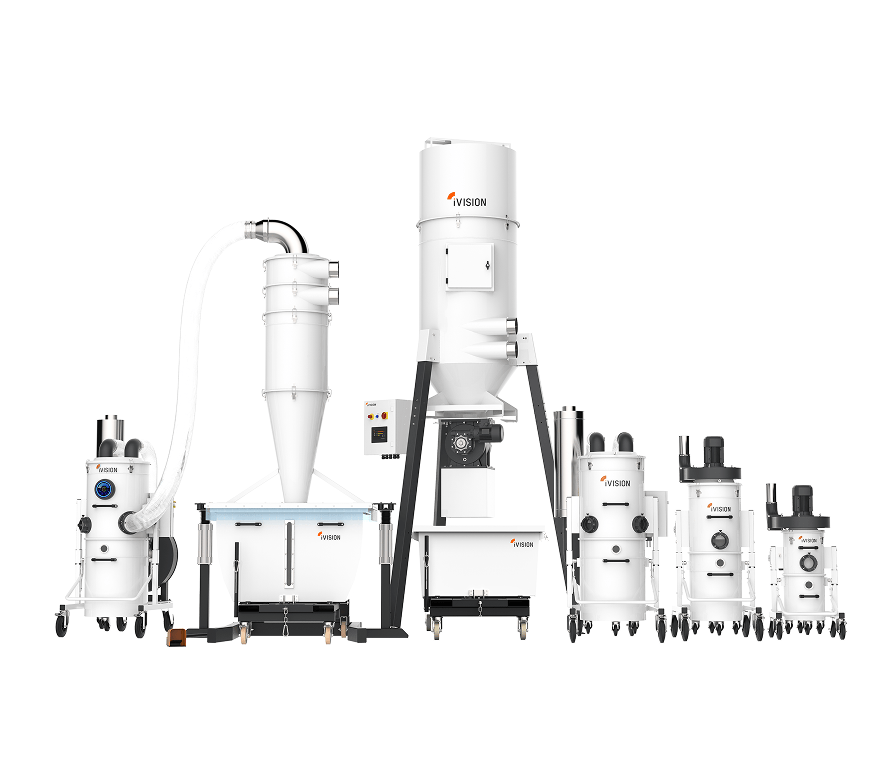
From one-to-one solutions to complete workshop solutions, for hard wood, softwood and MDF dust control.
Choosing machinery doesn’t have to be complex. Our buyers guides simplify the process and highlight what really matters. Speak to our experts for personalised advice.
