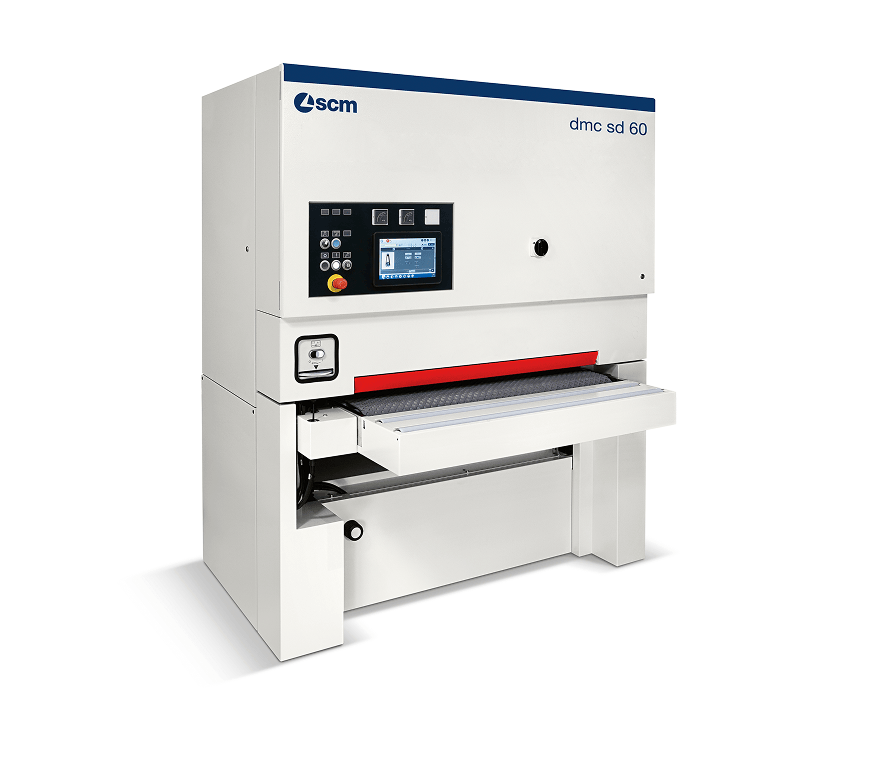
Single and multi-head through-feed sanding machines for solid wood, panels and composite materials.
Industrial sanding machines are used to prepare, calibrate and finish surfaces to a consistent quality before assembly, coating or final use. They play a critical role in manufacturing environments where surface accuracy, repeatability and finish quality are essential.
Single and multi-head through-feed sanding machines for solid wood, panels and composite materials.

Industrial deburring sanders for edge rounding, surface finishing and safe part handling.

High precision, versatile sanding machines for shaping, edge finishing and detailed abrasive work.

Available for bench mounting, pedestal mounting or complete with integrated extraction.
Sanders are widely used across furniture and joinery, panel processing, education, pattern making and general manufacturing. Depending on the application, they may be used for aggressive stock removal, accurate thickness calibration, contour shaping or fine finishing between coats.

Industrial sanding machines are widely used where consistent surface preparation and finishing are required, including:
Furniture and Joinery manufacturing
Building and Construction component production
Signage, Exhibitions and Theatre fabrication
Education workshops and training environments
Sanding machines commonly process materials including:
Solid Wood
Wood-Based Panels
Plastics
Composite materials
Modern sanding machines are designed to deliver controlled, repeatable results across a wide range of materials, including solid wood, wood-based panels, composites, plastics and specialist materials. With the correct specification, sanding systems can support everything from one-off components to continuous production workflows.
Daltons supports sanding machine users through application-led machine selection, professional installation and commissioning, certificated operator training, and ongoing service and technical support across the UK and Ireland.

Every workshop is different. Our specialists will help you confirm specifications, applications, and suitability before you invest. Get clear, practical advice tailored to your needs. Enquire today.
